The Benkelman Beam and heavy deflectometer rigs arrive in Bath on a Tuesday morning, navigating the narrow Georgian streets before positioning over the pavement layers on Great Pulteney Street. This isn't standard highway work – it's pavement engineering inside a UNESCO World Heritage site where the underlying geology shifts from soft alluvial clays near the Avon to the iconic Bath Stone limestone on the slopes of Lansdown. Our flexible pavement design for Bath projects combines deflection testing with laboratory characterisation of the local subgrade, accounting for the city's 800mm-plus annual rainfall and the constant stop-start traffic from 6 million visitors per year. For projects near the river corridor, we often pair the pavement assessment with CBR testing to quantify the bearing capacity of the floodplain soils before determining the granular layer thickness.
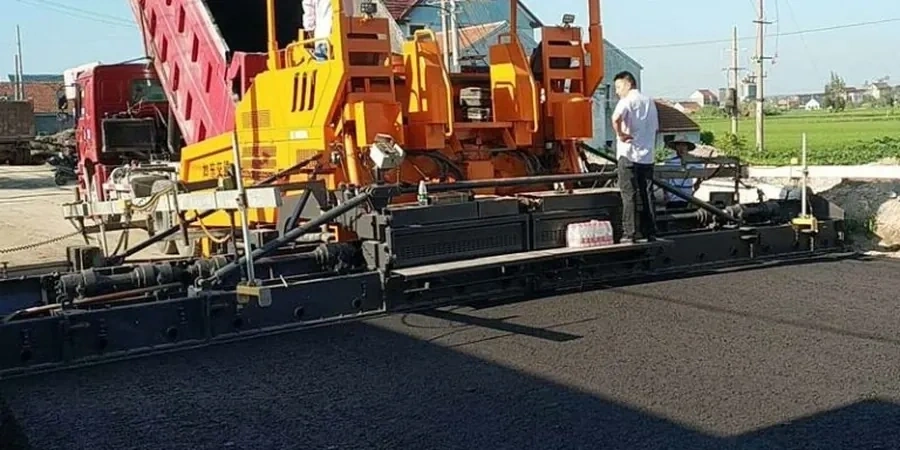
A well-designed flexible pavement in Bath isn't just asphalt on stone – it's a layered system engineered to distribute 40-tonne axle loads while accommodating the city's reactive clay subgrades.
Service characteristics in Bath
Critical ground factors in Bath
The contrast between a pavement designed for the limestone plateau at Odd Down and one for the alluvial zone near Bath Spa station is stark. On the higher ground, you're working with a stiff, well-draining subgrade – the design challenge is primarily traffic-induced fatigue cracking. Down by the Avon, the water table sits less than a metre below the surface for much of the winter. If the sub-base drainage isn't designed to handle that hydrostatic pressure, the granular layers become saturated, the effective stress drops, and the pavement life collapses from 40 years to barely a decade. We see this repeatedly in council car parks and industrial estate access roads where the original design assumed uniform conditions that simply don't exist across Bath's topography. Our approach models the specific groundwater regime at each site, specifying French drains or permeable sub-base layers where the water table threatens the structural integrity of the pavement section.
Our services
From the initial site investigation to the final pavement construction specification, we provide the geotechnical and pavement engineering data that Bath's consulting engineers and contractors need to build roads that last.
Subgrade Evaluation & CBR Testing
On-site California Bearing Ratio testing and laboratory determination of the subgrade's resilient modulus, particularly critical in Bath's clay-rich zones where the design CBR can fall below 2% during wet winters.
Pavement Thickness Design
Full analytical pavement design to DMRB CD 225, calculating the required thickness of bituminous, granular and capping layers based on the traffic spectrum, subgrade strength and design life specified by the client.
Existing Pavement Condition Assessment
Deflection testing with FWD or Benkelman Beam, core sampling and visual condition surveys to determine the residual life of existing pavements and design cost-effective overlays for rehabilitation projects.
Quick answers
How much does a flexible pavement design for a Bath residential road cost?
For a typical residential access road or small commercial development in Bath, the pavement design package – including site investigation, CBR testing and the design report to DMRB standards – falls between £1,270 and £4,540 depending on the pavement length, the number of investigation points required and whether we're designing a new construction or an overlay for an existing road.
What is the difference between flexible and rigid pavement?
Flexible pavements distribute traffic loads through a layered system – the load spreads wider as it descends through the bituminous and granular layers to the subgrade. Rigid pavements use the flexural strength of a concrete slab to bridge over weak spots. For most Bath projects, flexible pavement is preferred because it's easier to maintain, less disruptive to repair after utility works and better suited to the city's variable ground conditions.
How do you account for Bath's clay soils in the pavement design?
The Lias Clay that covers much of Bath's lower elevations has a high plasticity index and is susceptible to both swelling and shrinkage. We specify a capping layer – typically 350mm to 600mm of well-graded granular material – to provide a working platform and isolate the pavement layers from the moisture-sensitive subgrade. Where the CBR is below 2%, we may also recommend geogrid reinforcement or stabilisation of the upper subgrade with lime.
What traffic loading do you design for on Bath's roads?
We design to the DMRB traffic categories, typically ranging from 0.5 msa for a quiet residential cul-de-sac to 30 msa for a distributor road like the A36 link. For commercial developments, we work with the client's traffic forecast – including HGV delivery frequencies and bus movements – to ensure the pavement structure isn't under-designed for the actual loading it will see over its 20- to 40-year design life.
Do you handle the construction specification as well as the design?
Yes. Our deliverable is a complete pavement design report that includes the layer thicknesses, material specifications to BS 594987, compaction requirements, drainage details and a method statement that Bath's contractors can take straight to site. We can also provide construction-phase CQA testing – density testing, asphalt core sampling and deflection verification – to confirm the finished pavement meets the design assumptions.