Ground investigation in Bath forms the essential first phase of any construction or engineering project, providing critical data on the physical, chemical, and mechanical properties of the underlying soils and rocks. This category encompasses a range of intrusive and non-intrusive techniques designed to characterise ground conditions, identify potential geohazards, and inform safe, economical foundation design. In a city renowned for its UNESCO World Heritage status, understanding the subsurface is not merely a technical requirement but a fundamental duty of care to protect historic structures and sensitive landscapes from unforeseen ground movement or structural distress.
Bath's geology is dominated by the Jurassic-era Great Oolite Group, comprising thick sequences of limestone, mudstone, and fuller's earth, often overlain by variable superficial deposits of river terrace gravels and alluvium in the Avon valley. The steep hillsides that define the city's dramatic topography are frequently mantled with head deposits and are susceptible to ancient and active landslips, particularly within the Charmouth Mudstone Formation. This complex geological mosaic demands a tailored investigation strategy, as the engineering behaviour of the ground can change dramatically over short distances, directly influencing foundation loads, retaining wall design, and long-term slope stability.
All ground investigation work in Bath must be conducted in accordance with the robust framework of UK standards, most notably BS 5930:2015+A1:2020, the code of practice for ground investigations, and Eurocode 7 (BS EN 1997) governing geotechnical design. These documents set out rigorous procedures for sampling, exploratory test pit logging, in-situ testing, and laboratory analysis, ensuring that data is collected, interpreted, and reported to a consistent and defensible quality. Furthermore, projects must consider the requirements of the Construction (Design and Management) Regulations 2015 and local planning policies that often mandate a comprehensive desk study and intrusive investigation prior to development approval, particularly within conservation areas and on brownfield land.
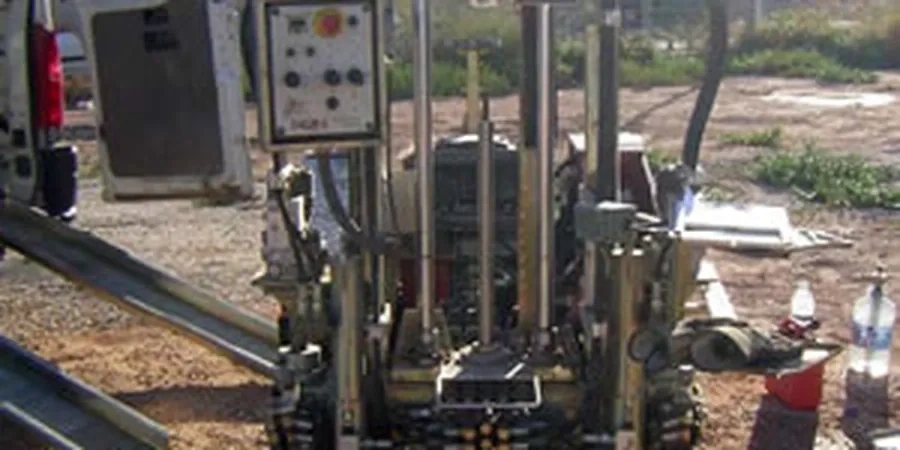
The scope of projects requiring thorough investigation is exceptionally broad, ranging from residential extensions and basement excavations to major infrastructure and slope remediation schemes. A deep understanding of the shallow ground profile, often revealed through an exploratory test pit, is vital for assessing foundation bearing capacity and drainage potential. For larger structures and those in challenging terrain, deeper methods like SPT drilling provide essential data on relative density and strength at depth, while CPT testing offers a near-continuous profile of soil behaviour, proving invaluable for settlement analysis, pile design, and identifying weak layers that could compromise stability. The correct selection of these techniques ensures that every project, from a modest garden wall to a multi-storey development, is underpinned by reliable geotechnical knowledge.
Quick answers
What is the purpose of a ground investigation in Bath?
The purpose is to characterise subsurface conditions to inform safe and economic design. In Bath, this means identifying the depth and strength of Oolitic limestone, the presence of weak mudstone layers, landslip risks, and groundwater levels. The data prevents unforeseen ground conditions, protects historic structures, and ensures compliance with BS 5930 and Eurocode 7 for foundation and earthworks design.
When is a ground investigation required for a development in Bath?
A ground investigation is typically required for any development involving new foundations, retaining walls, basements, or significant earthworks. Local planning authorities in Bath, particularly within conservation areas and on sloping or brownfield sites, will condition full intrusive investigation following a desk study to demonstrate that ground risks have been adequately assessed before construction begins.
What are the key stages of a typical ground investigation project?
A typical project follows a phased approach: Phase 1 is a desk study reviewing geological maps, historical records, and environmental data. Phase 2 involves designing and executing an intrusive investigation using techniques like exploratory test pits, SPT drilling, or CPT testing to recover samples and perform in-situ tests. Phase 3 comprises laboratory testing and geotechnical reporting to deliver design parameters.
How does Bath's unique geology influence the choice of investigation methods?
Bath's geology, with its interbedded strong limestone and weak mudstone, plus landslip-prone slopes, demands a flexible approach. Shallow, trial pit investigations may suffice for low-rise structures on flat gravel terraces, but deeper, continuous methods like CPT are crucial on hillsides to precisely locate shear surfaces and weak horizons, while SPT is essential for recovering rock cores from the Great Oolite for strength testing.