Geotechnical laboratory testing forms the backbone of any robust ground investigation in Bath, providing the quantitative data engineers need to design safe and economical foundations, slopes, and earthworks. The category encompasses a suite of physical and mechanical tests performed on disturbed and undisturbed soil samples recovered from boreholes and trial pits across the city and its surroundings. From the rapid classification provided by Atterberg limits to the strength and stiffness parameters derived from a triaxial test, these analyses transform field descriptions into reliable design parameters. In a city where historical structures coexist with ambitious new developments, understanding the subtle variability of the underlying ground through precise lab work is not just a technical requirement—it is an essential tool for managing risk.
Bath's geology is famously dominated by the Middle Jurassic Great Oolite Group, a sequence of oolitic limestones, calcareous mudstones, and clays that have shaped both the city's iconic honey-coloured architecture and its geotechnical challenges. Beneath the historic centre, the Bath Oolite Member presents a relatively strong building stone, but it is underlain and interbedded with the Fuller's Earth Formation, a notoriously variable unit rich in montmorillonite clays. These clays can exhibit significant shrink-swell potential and a marked reduction in strength when wet, making accurate Atterberg limits determination critical for assessing volume change hazard. Further down the valley slopes and towards the River Avon, superficial deposits including alluvium, river terrace gravels, and head deposits add complexity, often creating a mantle of softer, more compressible material over the bedrock. A well-designed laboratory programme must be tailored to this specific stratigraphic context to yield meaningful results.
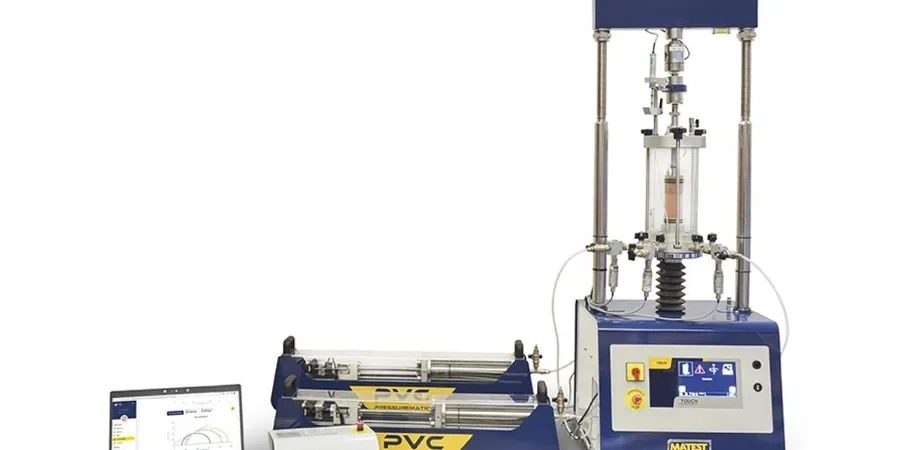
All laboratory testing conducted for geotechnical purposes in the UK must comply with the standards set out in BS 5930:2015+A1:2020, the code of practice for ground investigations, and the relevant parts of BS 1377:1990, which specifies the methods of test for soils for civil engineering purposes. For projects involving earthworks and road construction, the Specification for Highway Works (SHW) Series 600, as adopted by the local highway authority, often dictates the use of specific compaction tests such as the Proctor test. Crucially, for any scheme where testing results may inform a design to Eurocode 7 (BS EN 1997-2:2007), laboratories must demonstrate competence, typically through UKAS accreditation to ISO/IEC 17025 for the specific tests being performed. This ensures that the derived characteristic values for parameters like effective shear strength from a triaxial test are both traceable and defensible.
The range of projects in Bath that depend on this category of testing is exceptionally broad. The sensitive redevelopment or underpinning of a Grade I listed Georgian terrace on the steep slopes of Lansdown demands a refined understanding of the Fuller's Earth's strength and swelling behaviour. A new residential development on the floodplain alluvium near the river requires careful assessment of settlement potential through oedometer testing and a full grain size analysis to evaluate liquefaction risk. Highway improvement schemes, such as the A36 or A4 corridors, routinely rely on Proctor tests to specify compaction targets for engineered fill, ensuring long-term pavement performance. Even smaller domestic projects, like a rear extension on a Victorian property in Oldfield Park, benefit from basic classification testing to confirm the ground conditions assumed in the desk study.
Quick answers
What is the difference between a Standard and Modified Proctor test, and which one do I need for my project in Bath?
The Standard Proctor test uses a 2.5 kg hammer dropped 300 mm, while the Modified Proctor uses a 4.5 kg hammer dropped 450 mm, delivering significantly higher compactive effort. The choice depends on the specification. For highway earthworks in Bath, the local authority typically mandates Modified Proctor testing per the Specification for Highway Works Series 600 to achieve higher densities for critical structural fill, whereas Standard Proctor may be suitable for lower-specification landscaping fills.
How do local ground conditions in Bath, specifically the Fuller's Earth clay, influence the choice of laboratory tests?
The Fuller's Earth Formation contains highly active clay minerals, making it prone to swelling and shrinkage. Standard classification must include Atterberg limits to establish the plasticity index, which is a key indicator of volume change potential. For foundation design, effective stress triaxial tests on high-quality undisturbed samples are essential to measure the drained shear strength, as the material's behaviour changes dramatically with moisture content, a critical consideration on Bath's steep slopes.
Why is UKAS accreditation important when selecting a geotechnical laboratory for a project in the UK?
UKAS accreditation to ISO/IEC 17025 provides independent assurance that a laboratory is technically competent to perform specific tests to British Standards like BS 1377. For any design governed by Eurocode 7, the derived ground parameters must be based on reliable data. Using a UKAS-accredited lab for tests like triaxial or Proctor ensures the results are traceable, defensible to regulators and warranty providers, and meet the rigorous quality management standards expected on all UK construction projects.
What is the typical suite of tests required to fully characterise a soil sample from a ground investigation in Bath?
A full characterisation typically progresses from classification to mechanical testing. It begins with moisture content, a full grain size analysis combining sieve and hydrometer to determine the fines content, and Atterberg limits for cohesive soils. This is followed by strength testing, most commonly a triaxial test to define effective stress parameters, and compaction testing via a Proctor test if the material is to be reused as engineered fill. The exact suite is always tailored to the project and the specific stratum encountered.